
This unusual natural setting is a multicomponent archaeological site that incorporates both Late Pleistocene fossil species and Mid-Holocene species and artifact deposits (Wilson and Davis 1994). This site is located 8 km northeast of Whitehall, MT in Jefferson County. Overlooking the Jefferson River Valley to the south and the Boulder River Valley to the north, this locality is adjacent to and north of the Golden Sunlight Mine on the southeast-facing flank of Bull Mountain. Deposits of interest occur at the foot of Sheep Rock in the Sheep Creek Valley (Fig. ).

Ruby Valley
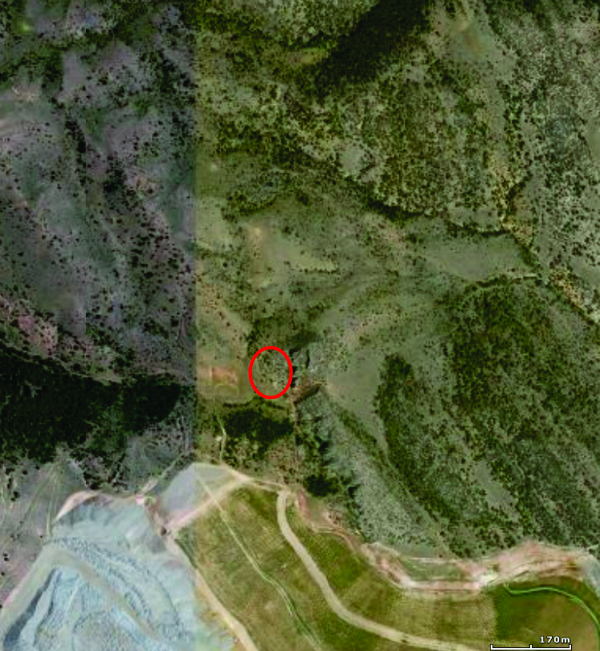 Figure 41. Aerial View Of The Sheep Rock Spring Site.
This thoroughly buried site was located and recorded during a survey of the spring area for the Montana State Department of Lands in advance of a stock-watering effort. Archaeologists noted three buried artifact-bearing components in an old cut. To secure a use permit from the Department, Golden Sunlight Mines hired archaeologist Dale Herbort (GCM, Inc., Butte) to evaluate the cultural resource value of this landscape. Backhoe testing, to a depth of 1.4 m, exposed a rock-lined, basin-shaped hearth; this feature was dated to 9,420 B.P. In 1985, further work was recommended in advance of a proposed land exchange (Herbort 1985).
Exposed in a cutbank when a road was cut to allow placement of a cattle-watering tank at Sheep Rock Spring (Fig. 2, a perennial spring), this very deep cultural deposit (Fig. ), the initial occupation of which was dated to ca. 10,000 B.P., was underlain by the surface of an avalanche admidst which bones of late Ice-Age mammals, all but two of them extinct today: bighorn sheep (Ovis canadensis) and wolverine (Gulo gulo) occurred. Older than 10,000 B.P., the remains of one individual each of North American cheetah (Acinoynx trumani ), horse (Equus sp., E. alaskae group), camel (Camelops sp.), large bighorn sheep (Ovis canadensis catclawensis), the great short-faced bear (arctodus simus), giant bison (Bison antiquus), and wolverine (Gulo gulo) were found in stratified context.
Figure 42. Extinct Species Frequenting The Sheep Rock Spring Habitat: Camel, Bison, Horse, and Cheetah.
 Figure 43. General View Of The Excavated Sheep Rock Spring Site And Rockshelter.
Early humans were not associated with these grassland animals, because people did not camp at that intermittently well-watered location until 1,000 years or so later. Bison (Bison bison) was utilized as early as 10,000 B.P. and B. bison was taken intermittently by succeeding hunter-gatherer groups for 5,000 years thereafter, until site abandonment ca. 3,000 years B.P.
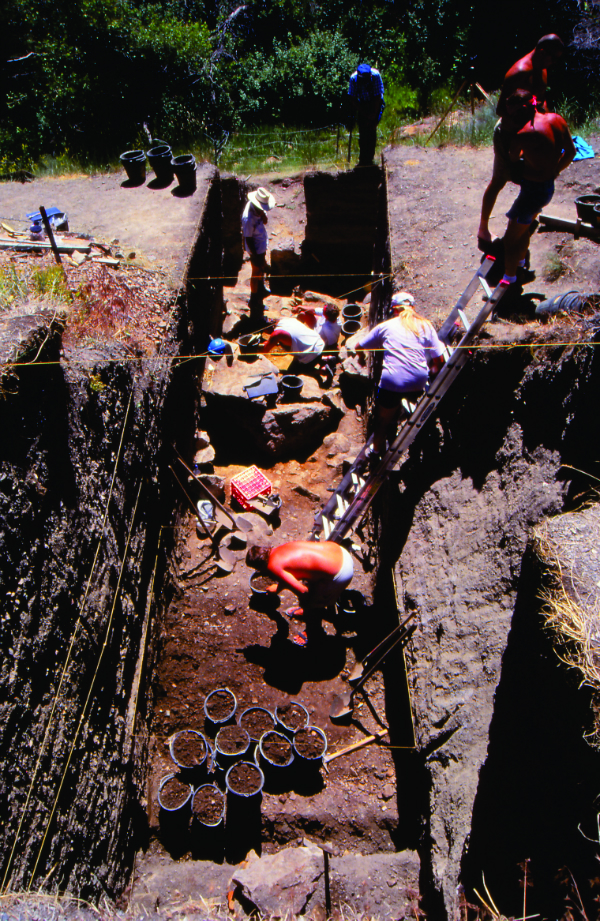 Figure 44. The Deep Trench At Sheep Rock Spring Looking South.
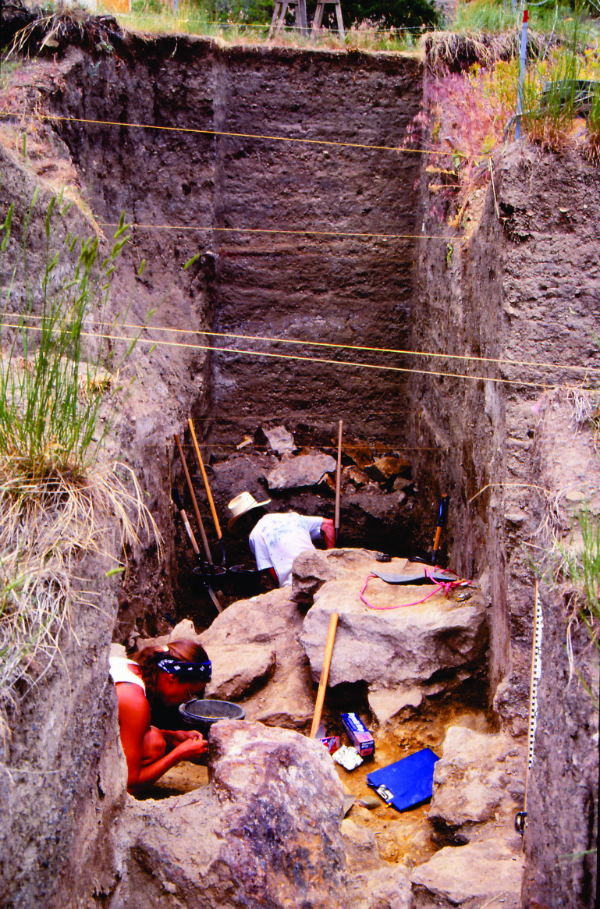 Figure 45. The Deep Trench At Sheep Rock Spring During Excavation. Bones Of Extinct Mammals Were Recovered From Amidst The Boulder-Strewn Area At The Base Of The Trench.