

Goshen
The name Mill Iron derives from a remote crossroads located about 12 km ( mi) to the west in Carter County. The site is located in the Humbolt Hills area of northernmost South Dakota-Wyoming Black Hills. The Early Precontact level is exposed around parts of the perimeter, about ft below the surface of a steep-sided, flat-topped butte in heavily dissected terrain.
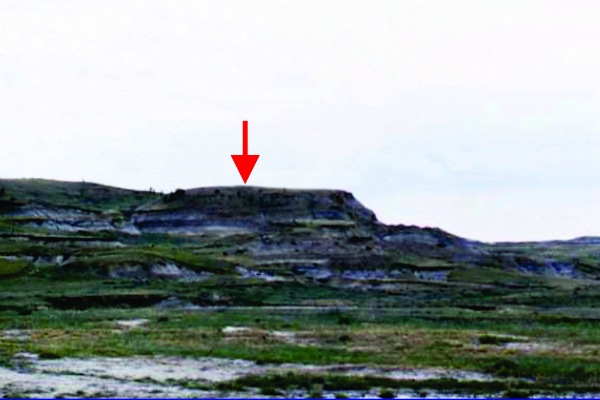 Figure 63. The Excavated Mill Iron Campsite Is Enclosed Within The Upper Several Feet of the Highest Butte (BLM photo).
Bureau of Land Management (BLM) archaeologists Jerry Clark and and Tom Schley identified this site in 1979 while assessing whether repair of a stock-watering reservoir might affect significant heritage properties. While they found that Mill Iron would not be affected, the BLM committed staff and funds to evaluate its significance with an interest toward proactive management. The BLM contracted with the University of Wyoming to conduct the investigation, with archaeologist George Frison (Laramie, WY) principal investigator. Test excavation in 1984 proved that Mill Iron did, in fact, contain highly significant deposits. Excavation was continued in 1985-1988 supported by the National Geographic Society and the National Science Foundation. The Mill Iron investigations yielded evidence that place the Goshen Complex firmly in elapsed time and thereby enables scholars to better understand its position relative to the Folsom Complex in the Northwestern Plains (Frison 1991). Key post-field research personnel included George Frison, Lawrence Todd, Dave Rapson, Lee Kreutzer
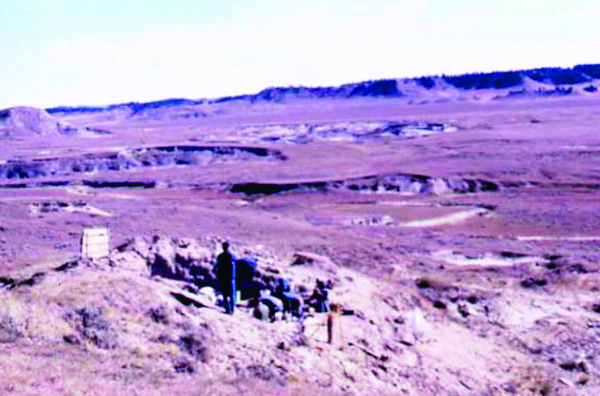 Figure 64. Excavation Underway At The Mill Iron Site (BLM photo).
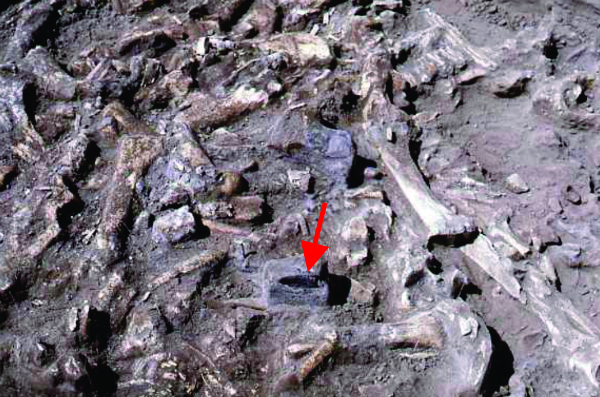 Figure 65. The Goshen Bison Bonebed At Mill Iron (Arrow Locates Complete Goshen Point Where It Was Lost Or Discarded) (BLM photo).
The Early Precontact level consisted of a bison bonebed, principally representing B. antiquus, but including a mammoth (Mammuthus sp.) rib that likely served as a haft for a Goshen Complex projectile point; a carefully drilled, conical shaped hole was present inside one end of the broken rib. Thirty Goshen projectile points: 11 from the camp area, 12 from the bonebed, and seven from the ground surface; and bifacial and retouched flake cutting implements, gravers, end scrapers, edge-damaged and undamaged flakes, blades, blade flakes, and a burin-spall were recovered. These tools were made principally from medium-sized jasper and chert cores. The bonebed was dated from 11,570 to 10,770 B.P. and the camp/processing area from 11,360 to 10,760 B.P. , which established contemporaneity with the Goshen Complex points (Frison 1996). Recent dating efforts yielded ages ca. 10,400 B.P., which are regarded as having better precision.